
Every scaffold bay needs a ledger running its length before anything else makes sense - it's the piece that actually ties one standard to the next. Get the length wrong and the whole bay spacing is off before a single board goes down.
A scaffolding ledger is the horizontal tube that runs along the length of a scaffold bay, connecting one standard to the next and giving the frame its longitudinal rigidity. It's not the transom (which runs across the bay to support the boards) and it's not a beam (which spans a much longer, unsupported gap) - it's the connective tissue that holds a run of standards together as one continuous line. So why does it matter which ledger you pick? Because a ledger sized for a Ringlock rosette joint won't seat into a Kwikstage or Cuplock standard, no matter how close the tube diameter looks on paper.
|
0.39 – 4.14 m
Verified ledger length range |
48.3 mm
Standard tube diameter |
Aluminium & Steel
Materials covered |
ISO 9001
Certification to check for |
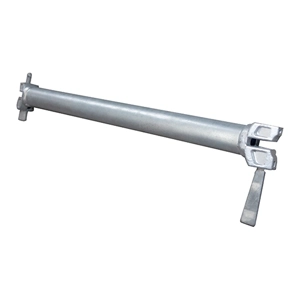
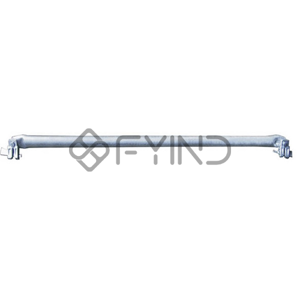
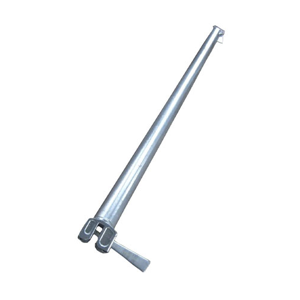
A scaffolding ledger is the primary horizontal member that connects scaffold standards along the length of a scaffold bay. Once locked into the standards using the appropriate system connection—such as a Ringlock wedge, Cuplock blade, or Kwikstage fixing—it creates a rigid framework that distributes loads evenly throughout the scaffold structure. Ledgers maintain consistent bay spacing, improve structural stability, and provide the support needed for transoms, scaffold boards, guardrails, and working platforms.
Without properly installed ledgers, scaffold standards can move independently, reducing the overall strength of the scaffold. Selecting the correct ledger length and ensuring compatibility with the scaffold system are essential for safe erection, efficient load transfer, and compliance with international scaffolding standards.
| Component | Purpose |
|---|---|
| Steel Tube | Forms the main horizontal member that transfers loads between scaffold standards. |
| Ledger Blade / End Connector | Connects the ledger securely to Ringlock, Cuplock, Kwikstage, or other scaffold systems. |
| Wedge Lock / Locking Pin | Locks the ledger firmly into position to prevent movement during use. |
| Protective Finish | Usually hot-dip galvanized or painted to improve corrosion resistance and service life. |
| Identification Markings | May include manufacturer details, batch numbers, or certification markings for traceability. |
| Ledger Type | System | Verified Sizes | Best For |
|---|---|---|---|
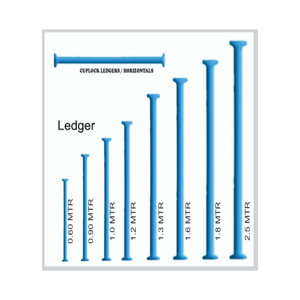
| Standard Steel Ledger | Kwikstage / Cuplock / tube-and-fitting | 0.6–2.5 m, 2.31–8.5 kg | General construction scaffolding |
| Ringlock System Ledger | Ringlock | 0.39–4.14 m, 1.9–13.4 kg/m | Modular high-rise & industrial rigs |
| Aluminium Ledger | Ringlock & lightweight systems | Matches steel length range | Facade access, frequent repositioning |
Q: Does ledger length actually matter that much?
Yes - more than most buyers expect. The ledger length is what sets your bay spacing, and bay spacing determines how many standards, how many boards, and how much decking your whole project needs. Order the wrong length and you're either re-ordering everything or forcing an awkward, non-standard bay width for the rest of the job. Measure twice, order once.
The load capacity of a scaffolding ledger depends on multiple engineering factors rather than a single fixed value. Always follow the manufacturer's technical specifications and the scaffold system's design calculations before installation.
| Specification | Typical Value / Range | Effect on Load Capacity |
|---|---|---|
| Material | Galvanized Steel / Aluminium | Steel generally provides higher strength, while aluminium reduces overall scaffold weight. |
| Tube Diameter | 48.3 mm | Industry-standard diameter compatible with most modular scaffold systems. |
| Tube Wall Thickness | Typically 2.5–3.2 mm | Thicker walls improve bending resistance and overall load-bearing performance. |
| Ledger Length | 0.39–4.14 m | Longer ledgers experience greater bending forces and generally support lower loads over longer spans. |
| Steel Grade | High-strength structural steel | Higher-grade steel increases structural capacity and durability. |
| Connection System | Ringlock, Cuplock, Kwikstage, Tube & Coupler | Connection design influences load transfer efficiency and scaffold rigidity. |
| Protective Finish | Hot-Dip Galvanized / Painted | Galvanized finishes improve corrosion resistance and extend service life in outdoor environments. |
| Applicable Standards | EN 12811, BS 1139 (manufacturer dependent) | Products tested to recognized standards offer verified structural performance and safety. |
Three suppliers spanning Dubai and Ajman, from a nine-length ISO 9001 steel range to a dual-material Ringlock specialist.
Phone: +971 4 885 5001 | Location: Nad Al Hammar, Dubai, UAE | Serves: UAE-wide
Ascend publishes the widest length spread of any supplier on this page - nine distinct sizes from 0.6 m to 2.5 m, each with its own confirmed weight, plus ISO 9001 certification behind the whole range. Why does that granularity matter? Because it means you can match a ledger to almost any bay width without rounding up to the next stock size and leaving an awkward gap in the frame. As a Dubai-based manufacturer established in 2006 with UAE-wide delivery, they're a strong first call whether you need two ledgers or two thousand.
Phone: +971 4 589 2555 | Mobile: +971 52 682 4374 | Location: Dubai, UAE
Al Naseeha's Ringlock ledger is the standout for anyone running an actual Ringlock rig - the length range (0.39 to 4.14 m) covers everything from a short internal access run to a full-width industrial bay, and the choice between aluminium and steel means you can pick stiffness or weight savings without switching supplier. Which should you pick? Steel for load-bearing runs where rigidity matters most; aluminium where the rig gets moved often and every kilogram carried up the tower counts.
Location: Ajman, UAE | Serves: Ajman, Sharjah, Dubai, Northern Emirates | Phone: +971 54 218 8478
New Ammar is a general scaffolding trading company based in Ajman, listed alongside other Northern Emirates scaffolding businesses. As with our other pages in this series, their specific ledger lengths, weights, and materials aren't broken out in detail on their public listing the way Ascend's and Al Naseeha's are - worth a direct enquiry through their fyind profile if Ajman or Sharjah proximity matters more to you than sourcing everything from Dubai.
This trips up more buyers than any other scaffold terminology question. Picture a bay from above: the ledger runs along the length of the bay, tying one standard to the next in a straight line. The transom runs across the bay, sitting on top of the ledgers and directly supporting the boards. A beam is a completely different animal - a long-span structural member for bridging a gap like a stairwell that neither a ledger nor a transom is built to handle.
Why does getting this right matter for your order? Because "give me some scaffold tubes" gets you the wrong part more often than not. A ledger sized and rated for its role won't necessarily work as a transom, even though both are horizontal tubes of similar diameter - the load path and connection points are different.
UAE ledgers are built around a handful of joint systems - the brand name on your standards is what actually determines which ledger fits, not the tube diameter alone:
| Problem | Why It Happens | Fix |
|---|---|---|
| Ledger won't seat into the standard | Wrong system joint (e.g. a Ringlock-end ledger on a Kwikstage standard) | Confirm the exact system name before ordering, not just the tube diameter |
| Uneven bay spacing across the site | Mixed ledger lengths ordered without a standardized bay width in mind | Standardize on one or two lengths for the whole project up front |
| Corrosion on steel ledgers after months on site | UAE heat and coastal humidity accelerate rust on unprotected steel | Specify galvanized finish for anything staying outdoors longer than a few weeks |
| Ledger flexes or sags under board load | Length exceeds the rated span for that tube gauge, or the wrong material was substituted | Check the manufacturer's rated span for the specific length and material before installing |
The figures below are a general market guide, not a quote from any supplier named on this page. Ledger pricing depends on length, material, and order volume, and moves with steel costs over time.
| Ledger Type | Typical AED Range (per piece) | What Moves the Price |
|---|---|---|
| Standard steel ledger (0.6–1.3 m) | 25 – 55 | Length, wall thickness, certification |
| Standard steel ledger (1.6–2.5 m) | 55 – 100 | Length and weight scale directly with cost |
| Ringlock steel ledger (per metre) | 30 – 60 /m | Wedge-lock end fitting adds cost over plain tube |
| Ringlock aluminium ledger (per metre) | 45 – 85 /m | Aluminium material premium over steel |
Note: these ranges are indicative market pricing for buyer guidance only and are not quotes from any of the three suppliers listed on this page.
A ledger runs the length of the bay, connecting standards to each other in a straight line. A transom runs across the bay, sitting on the ledgers to directly support the boards. Both are horizontal tubes, but they run in different directions and do different structural jobs.
Steel gives more rigidity and load capacity per length, which suits heavier construction and industrial rigs. Aluminium weighs significantly less, which speeds up handling on facade and maintenance work where the same crew repositions the scaffold often. Match the material to how frequently the rig moves, not just the budget.
No. Ringlock's wedge-lock rosette joint, Kwikstage's cup-and-wedge joint, and Cuplock's cup joint are all different end-fitting geometries. A ledger built for one system's joint won't lock securely into another's, regardless of matching tube diameter.
There's no single universal answer - it depends on your project's bay spacing design. Verified UAE suppliers publish lengths from as short as 0.39 m up to 4.14 m, so measure your intended bay width first and pick the closest matching stock length rather than adjusting your design around whatever's easiest to source.
Ascend Access Systems Scaffolding LLC and Al Naseeha Building Materials Trading are both Dubai-based. New Ammar Scaffolding Trading LLC is based in Ajman, covering the Northern Emirates directly.
Yes, scaffolding ledgers are designed for repeated use provided they remain structurally sound. Before reusing a ledger, inspect it for bending, excessive corrosion, cracked welds, damaged end connectors, or loose locking wedges. Ledgers that pass inspection can safely return to service, while any component showing permanent damage should be removed from use and replaced.
A hot-dip galvanized scaffolding ledger can provide many years of reliable service when used, stored, and maintained correctly. Its actual lifespan depends on factors such as exposure to moisture, coastal environments, handling practices, loading conditions, and inspection frequency. Regular cleaning, proper storage, and routine inspections help maximize its service life.
Scaffold ledgers most commonly fail because of overloading, incorrect installation, impact damage, excessive corrosion, bent tubes, worn end connectors, or using a ledger with an incompatible scaffold system. Failure can also occur when damaged components remain in service or when the scaffold is erected without following the manufacturer's design recommendations and applicable safety standards.
Minor surface corrosion may be treated as part of routine maintenance, but scaffold ledgers with bent tubes, cracked welds, deformed end connectors, damaged locking mechanisms, or other structural defects should not be repaired for load-bearing use unless the manufacturer specifically permits and certifies the repair. In most cases, replacing a damaged ledger is the safest and most reliable solution.
Scaffold ledgers should be inspected before every installation, after severe weather conditions or impact events, following any structural modifications, and as part of routine periodic inspections during use. Regular checks help identify bent tubes, corrosion, damaged locking mechanisms, loose end connectors, or other defects that could affect scaffold stability and worker safety.
Scaffolding ledgers should comply with recognized industry standards such as EN 12811 for temporary works equipment and BS 1139 for metal scaffolding components, where applicable. Buyers should also verify that the ledgers are compatible with their scaffold system, manufactured using quality-controlled processes, and supplied with the relevant test certificates or technical documentation required for their project.

 0
0