





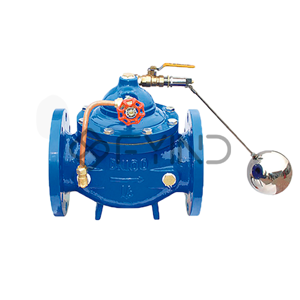

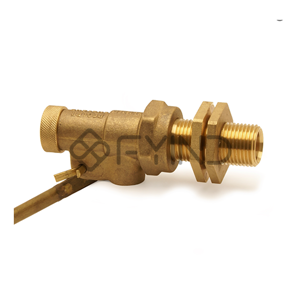


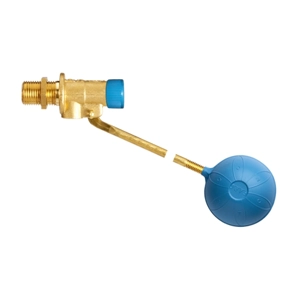



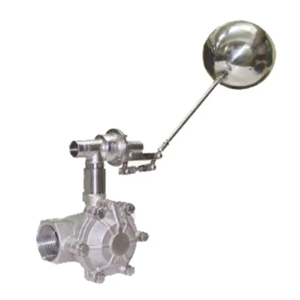

Here's the question that actually matters before you buy a float valve: is it the float valve that's wrong, or is it the installation? A huge share of "faulty valve" complaints in the UAE - tanks that overflow, pumps that short-cycle, water hammer that rattles a whole plant room - trace back to the wrong valve type, the wrong size, or the wrong float arm length for the tank, not a defective part.
| Company | Location | Best For | Phone |
|---|---|---|---|
| Aira Automation Valves Trading LLC | Dubai | Automation and control valve trading - relevant for hydraulic/modulating float valves | +97142880242 |
| Gala International FZE | Dubai | General international trading - cross-border sourcing for specific brands/models | +966567318603 |
| Canvas General Trading LLC | Dubai | General trading - broad plumbing and valve stock for quick local pickup | +97142866121 |
| Master Mechanical Equipment LLC | Abu Dhabi | Mechanical equipment - relevant for industrial/MEP-grade float valves | +97125553534 |
| Build Line Building Materials | Sharjah | Building materials - relevant for residential/overhead tank float valves | +97165356688 |
| Floben Trading LLC | Sharjah | General trading - stock availability for standard BS1212 valve sizes | +971555204782 |
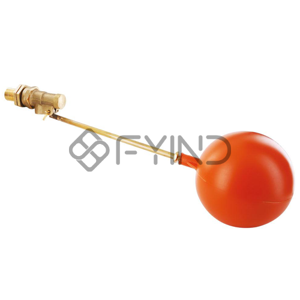
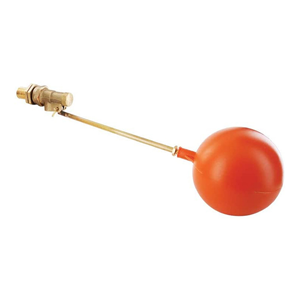
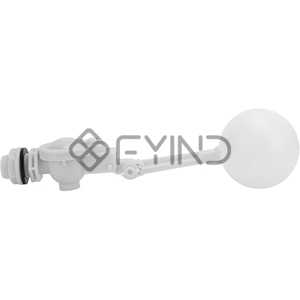
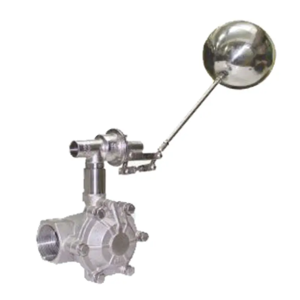
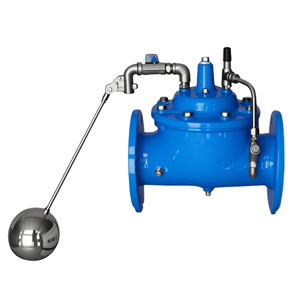
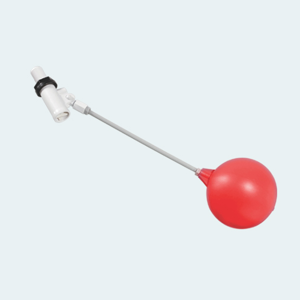
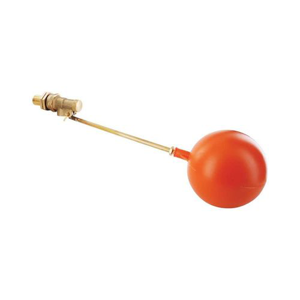
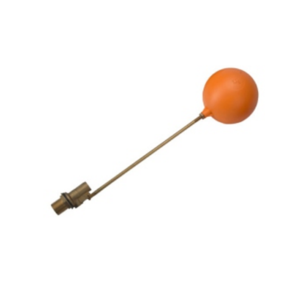
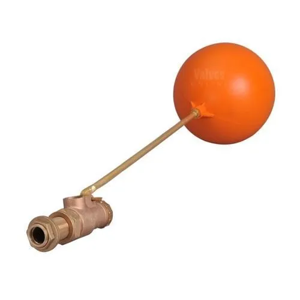
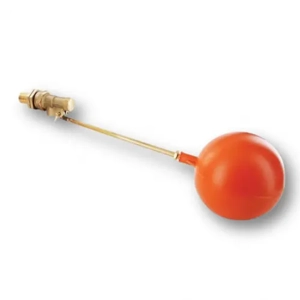
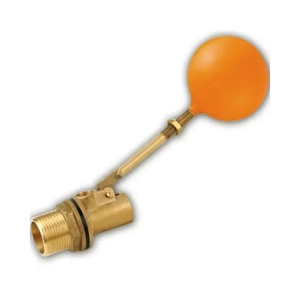
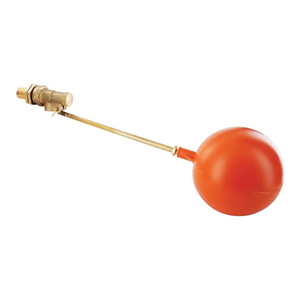
A float valve is a self-acting mechanical liquid-level controller. A float (a hollow ball, a horizontal arm-mounted float, or a vertical rod float, depending on the design) rises and falls with the water level inside a tank. As it rises, it mechanically or hydraulically closes the valve; as it falls, it reopens the valve to let water back in. No electricity, no sensor wiring, no controller - just physics.
Q: Isn't a float valve just an old-fashioned toilet cistern part?
The small brass ballcock in a toilet cistern is a float valve, yes - but the same basic principle scales up dramatically. Overhead water tanks, underground reservoirs, cooling tower basins, fire-fighting storage tanks and sewage treatment plant (STP) balancing tanks across the UAE all rely on float-operated valves, from a simple 1/2" BS1212 ballcock to a large hydraulically-actuated modulating float valve controlling flow into a multi-thousand-litre reservoir.
Why does this matter more in the UAE specifically? High ambient temperatures accelerate wear on rubber seals and washers, hard groundwater and desalinated supply can leave scale on moving parts, and many buildings run tanks at higher pressure than older float valve designs were built for - all of which push toward choosing the right material and pressure rating from day one, not just the cheapest valve in stock.
Q: Which type should I ask for?
For a small overhead tank or cistern, a BS1212 Part 1 or Part 2 valve in brass or stainless steel is usually sufficient. For cooling towers, STPs, fire tanks or any application on mains pressure above roughly 6-8 bar, ask specifically about equilibrium or hydraulically-operated modulating float valves - a standard domestic ballcock is the wrong tool for that pressure range and will wear out or hammer badly.
| Material | Typical Use Case | Why It's Chosen |
|---|---|---|
| Brass (CZ132 / HPb59-3 or similar) | Domestic and light commercial tanks, cisterns, BS1212 ballcocks | Good corrosion resistance for potable water, cost-effective, easy to machine for the piston/seat |
| Bronze / Gunmetal | Marine, industrial and higher-pressure applications | Stronger resistance to dezincification and seawater/brackish water than standard brass |
| Stainless Steel (304 / 316) | Food-grade, desalination plants, STP/WTP, corrosive environments | Superior corrosion resistance, important where water quality or ambient humidity is aggressive |
| Cast Iron / Ductile Iron (epoxy-coated) | Larger flanged industrial float valves, reservoirs, fire-fighting tanks | Cost-effective at larger diameters (DN80 and above), robust under sustained pressure |
| PVC / Plastic | Small agricultural, irrigation and low-pressure tank float valves | Lightweight, corrosion-proof, economical, but lower pressure and temperature tolerance than metal |
Q: What's the single most common specification mistake buyers make?
Ordering by pipe size alone, without checking the float arm length or float rod length against the actual tank depth and mounting position. A valve that's the right diameter but has a float arm too short (or too long) for the tank either shuts off too early, wasting tank capacity, or too late, risking overflow - and this is one of the most common "faulty valve" complaints that turns out to be a sizing issue, not a product defect.
The correct float valve size is determined by more than the diameter of the tank inlet pipe. A properly sized valve must provide the required filling flow, withstand the available water pressure and physically shut off at the required tank level.
| Sizing Factor | What to Check |
|---|---|
| Inlet connection | Measure the existing pipe or connection and confirm the required nominal size, such as 1/2", 1", 2" or DN50. |
| Required flow | Determine how quickly the tank needs to refill. A larger connection does not automatically mean the valve is correctly sized for the required flow. |
| Water pressure | Check minimum and maximum operating pressure and select a valve rated for the actual system conditions. |
| Float arm / rod length | Check the tank depth, inlet position and shut-off level. The float must have enough movement to close the valve without hitting the tank wall or fittings. |
| Connection orientation | Confirm whether the valve is required for a side-entry or bottom-entry installation and check the manufacturer's installation dimensions. |
For typical domestic and commercial tanks: 1/2" to 2" float valves are commonly encountered, while larger industrial tanks and reservoirs may use DN50, DN80, DN100 and substantially larger flanged hydraulic level-control valves. The required size should ultimately be selected from flow, pressure and installation conditions rather than nominal pipe size alone.
A valve can have the correct pipe diameter but still be unsuitable because its flow capacity, pressure rating or float arm length does not match the tank. This is one of the specification issues already identified in the guide.
BSP and NPT are different pipe-thread standards and should not be treated as interchangeable when ordering a float valve. The correct connection must match the mating pipe, fitting or adapter installed on the tank.
| Connection | Typical Identification | Buyer Check |
|---|---|---|
| BSP | British Standard Pipe thread family, commonly encountered in UAE plumbing and water-system components. | Confirm whether the supplier means BSPP (parallel) or BSPT (tapered), especially where the connection seals on the thread. |
| NPT | National Pipe Taper thread, commonly specified on equipment and components using US-origin pipe-thread standards. | Confirm that both the valve and mating fitting are NPT before ordering. |
| Flanged | Used more commonly on larger industrial and hydraulic level-control valves. | Confirm DN size, pressure class/rating, flange drilling standard and mating flange details. |
Do not order by "1-inch" alone. A 1-inch BSP connection and a 1-inch NPT connection are not simply different names for the same thread. If the thread standard is wrong, the valve may not seat correctly and forcing incompatible threads can damage the connection.
Instead of asking for "a 1-inch float valve," specify something such as "1-inch float valve, BSP connection, brass body, suitable for potable water, with [required] operating pressure." This gives the supplier enough information to quote the correct configuration.
Float valve sizes used in the UAE vary widely depending on the tank, flow requirement and application. Small overhead tanks generally use threaded valves, while larger commercial and industrial installations may require flanged hydraulic level-control valves.
| Typical Size | Typical Application | Typical Configuration |
|---|---|---|
| 1/2" - 3/4" | Small domestic tanks, cisterns and low-flow applications | Threaded brass or plastic float valve |
| 1" - 1-1/2" | Residential, commercial and medium-size storage tanks | Brass or stainless steel direct-acting valve |
| 2" | Larger commercial tanks and higher-flow filling applications | Heavy-duty threaded or suitable hydraulic configuration |
| DN50 - DN100 | Industrial tanks, reservoirs, fire-water systems and cooling-water applications | Flanged cast or ductile iron / hydraulic level-control valve |
| DN150 and above | Large reservoirs, municipal and high-flow industrial installations | Flanged hydraulic or modulating level-control valve |
These are common size categories rather than a rule for every installation. The document already notes a range from 1/2" domestic ballcocks through DN300+ industrial level-control valves. Always confirm required flow, pressure, connection standard and tank geometry before selecting the final size.
"Float valve" covers two genuinely different product families, and the brand names buyers ask for usually signal which one they mean: water tank/plumbing float valves (the BS1212-type ballcocks and larger hydraulic level control valves) and drill pipe float valves (oilfield check valves fitted inside a drill string to stop fluid flowing back up the pipe - a completely different application used in drilling and well-service work, not water storage). A couple of the brand names below belong to that second category, and it matters to get this right before ordering, so each brand is labelled by which family it actually belongs to.
FGV / FGV Controls - FGV International is a ductile iron valve manufacturer with production in Europe and India and an assembly, testing and stock facility in the UAE (distributed in-country through authorised partners such as Fouress Equipments Trading LLC). FGV Controls produces float valves as part of a wider ductile iron valve range for water, wastewater and sewerage applications.
| Specification | FGV Controls Float Valve (Ductile Iron Range) |
|---|---|
| Body material | Ductile iron |
| Size range | DN50 (2") up to DN3000 (120") across the FGV ductile iron valve range |
| Typical application | Water distribution, wastewater, sewerage and fire industry tanks/reservoirs |
| Manufacturing origin | Europe and India, with UAE-based assembly, testing and stock |
| Best suited for | Larger industrial and municipal-scale reservoir and tank level control, not small domestic cisterns |
Watts - Watts Water Technologies is a globally established manufacturer whose mechanical float valves (Series 375 through 2000, standard and heavy duty) are widely specified for commercial, industrial and agricultural water level control, including air conditioning, refrigeration and irrigation systems.
| Specification | Watts Mechanical Float Valve (Standard/Heavy Duty Series) |
|---|---|
| Body material | Bronze |
| Size range | 3/8" up to 2" (various models across the 375-2000 series) |
| Maximum pressure | Up to 165 psi (11.4 bar) on heavy duty models; 125 psi (8.7 bar) on standard duty models |
| Flow rate | Roughly 20 GPM (1/2") up to 233 GPM (1-1/2") depending on model |
| Key features | Machined flange, serrated arms for level adjustment, replaceable seals/plungers, no-jam single lever action |
| Typical application | AC and refrigeration make-up water, irrigation tanks, commercial/industrial reservoirs |
Pegler Yorkshire - a long-established UK valve manufacturer whose float valves are widely distributed across Gulf plumbing supply chains in two main forms: a standard BS1212 Part 2 diaphragm valve and the higher-pressure Pegler 901 Equilibrium range (BS1212 Part 3).
| Specification | Pegler Yorkshire BS1212 Part 2 (Standard) | Pegler 901 Equilibrium (BS1212 Part 3) |
|---|---|---|
| Body material | Brass | Gunmetal (corrosion-resistant copper alloy) |
| Float material | Plastic (4-1/2" / 101.6mm) | Copper ball float (mandatory - plastic float not recommended) |
| Maximum pressure | Up to 14 bar (206 psi) | Up to 10 bar, designed for fast, quiet, smooth closing at higher pressure |
| Size range | 1/2" (with related sizes in the wider range) | 1/2" up to 4" |
| Approval | WRC/WRAS-referenced | Full-bore seat for high flow rates |
| Key feature | Thumbscrew lever for vertical/horizontal float adjustment; rubber diaphragm | Pressure-balanced piston design reduces the force the float must exert to shut off |
Prestex - a long-recognised legacy brand name in BS1212 Part 1 (piston-type) brass float valves, widely circulated across UK and Gulf plumbing merchant catalogues for decades. A standard BS1212 Part 1 valve of this type typically carries the following specification, though buyers should request the current manufacturer datasheet for the specific model being quoted, since several manufacturers (including Prestex) have historically produced valves to this same standard:
| Specification | Typical BS1212 Part 1 Brass Float Valve (Prestex-Type) |
|---|---|
| Standard | BS 1212 Part 1 (high pressure piston type) |
| Body/piston/seat material | Brass (smaller sizes sometimes use acetal seats/pistons) |
| Size range | 1/2" up to 2" |
| Maximum pressure rating | Commonly PN20 |
| Maximum temperature | Commonly up to 85°C |
| Float options | Copper or plastic float, threaded to match valve size (5/16" BSW on 1/2", up to 5/8" BSW on 2") |
Baker and Drill Max (commonly referenced alongside manufacturer Drillmax Inc) are names associated with drill pipe float valves - check valves fitted inside a drill string during drilling and well-service operations to prevent fluid backflow, used in oil & gas, water well and air drilling work. This is a genuinely different product from a water tank float valve, and the two should not be confused when placing an order.
| Specification | Drill Pipe Float Valve (Baker-Style / Drillmax-Type) |
|---|---|
| Function | Check valve inside a drill string preventing fluid backflow - not a tank level control device |
| Common types | Model F-type plunger valve (instant shut-off); Model G-type flapper valve (high-flow, corrosive-well suited) |
| Construction | Alloy steel body with integral cages and plungers |
| Brand history | The original Baker®/Baker SPD® brand was discontinued after Baker Hughes sold the business in 2006; current manufacturers (including Drillmax Inc) produce Baker-style valves that are dimensionally interchangeable with the original |
| Typical application | Oil & gas drilling, water well drilling, air drilling, coil tubing operations |
Q: I was quoted a "Baker" or "Drill Max" float valve for a water tank - is that right?
Almost certainly not. If a quote references these names for a water storage tank, cooling tower or cistern application, double-check with the supplier - these brand names are associated with oilfield drill string check valves, not water level control. Confirm the actual product and standard (BS1212 or equivalent) being supplied.
These are the problems that actually generate service calls and complaints - not textbook failure modes. Here's what causes each one and the practical fix.
The technical patterns below (water hammer, equilibrium valve design, altitude valve sensing lines, modulating float behaviour) are documented in manufacturer technical literature (Bermad waterworks and construction/buildings product data) and the BS1212 standard itself. They reflect genuine, well-documented failure modes in float valve systems rather than invented scenarios.
What happens: A standard piston-type BS1212 ballcock snaps shut quickly as the float rises, and on higher mains pressure this sudden stop creates a pressure surge that bangs through the pipework - especially noticeable on taller buildings with higher static head.
The fix: Switch to a diaphragm-type or equilibrium float valve (BS1212 Part 2 or Part 3), which closes more gradually and is specifically designed to handle higher pressure without the same shock-closure behaviour.
Who can help: Aira Automation Valves Trading LLC, trading in automation and control valves, is a sensible first call to discuss a diaphragm or equilibrium replacement for a hammering system.
What happens: The float arm or float rod length doesn't match the tank's actual depth and mounting position, so the float never reaches the height needed to fully shut the valve before water reaches the overflow pipe - a sizing and installation issue, not a faulty part.
The fix: Confirm float arm/rod length against the actual tank depth and mounting bracket position before ordering, and have the shut-off level checked and adjusted on commissioning, not just assumed correct out of the box.
Who can help: Build Line Building Materials and Floben Trading LLC, both building-materials and general trading suppliers in Sharjah, can advise on matching valve and float dimensions to your specific tank.
What happens: Hard water and scale from desalinated or groundwater supply builds up on the piston or seat over time, particularly in brass valves that aren't regularly exercised. This is a well-documented issue in Gulf water systems, not specific to any one brand.
The fix: Specify stainless steel internals where budget allows, especially for tanks that see infrequent demand swings, and build periodic manual exercising of the valve into maintenance schedules rather than waiting for it to fail.
Who can help: Master Mechanical Equipment LLC, a mechanical equipment supplier in Abu Dhabi, is well placed to advise on more scale-resistant internals for industrial and MEP applications.
What happens: On larger hydraulically-operated modulating float valves, an undersized or incorrectly configured pilot float system can cause the main valve to repeatedly open and close ("hunt") instead of settling at a steady modulated position - a documented behaviour in hydraulic level control systems when the pilot and main valve aren't properly matched to the application.
The fix: Confirm the pilot float type (modulating vertical, bi-level, or electric) is correctly matched to the application - cooling tower make-up, treated water feed, or reservoir filling each have a recommended configuration from the valve manufacturer.
Who can help: Aira Automation Valves Trading LLC's automation and control valve focus makes it a relevant point of contact for diagnosing and correcting pilot/main valve mismatches on industrial systems.
What happens: A buyer asking for a "float valve" for a cooling tower make-up line, expecting a hydraulically-operated modulating valve, can be quoted and supplied a small domestic ballcock sized for a 1/2" connection - technically a "float valve," but completely unsuited to the application.
The fix: Specify the actual application (domestic tank, cooling tower, STP, fire tank, irrigation) and the connection size and pressure upfront, not just the generic term "float valve," to avoid a costly mismatch.
Who can help: Canvas General Trading LLC and Gala International FZE, both general trading companies, should be asked directly to confirm application and pressure rating before quoting, precisely because "float valve" covers such a wide product range.
Almost none of these are genuine product defects. They are specification and sizing problems - the wrong valve type for the pressure, the wrong float length for the tank, the wrong internals for the water quality, or a mismatch between what the buyer meant and what the supplier quoted. A five-minute conversation about the actual application before ordering prevents nearly all of them.
Aira Automation Valves Trading LLC supplies the High Pressure Full Flow Float Valve, a float-operated valve designed for automatic water-level control in high-pressure applications. The valve is listed in the Mark & Aira Float Valve range and is suitable for water tanks, boilers and pressure-vessel applications.
Product: High Pressure Full Flow Float Valve
Specifications:
Key Features:
Applications: Water tanks, boilers and pressure vessels requiring automatic water-level control and overflow protection.
Services: Float valve supply, product selection support, technical guidance, quotations and valve-related engineering assistance.
Location: Dubai, UAE · Phone: +971 4 288 0242
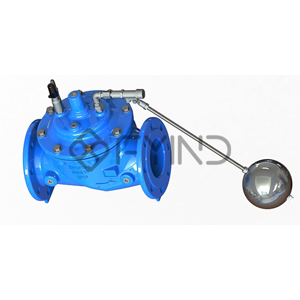
Gala International FZE supplies GALA modulating float control valves for automatic water-level control in water towers, pools and other water systems.
Float Valve Products: Modulating Float Control Valves for waterworks and data-centre water-level control applications.
Specifications:
Key Features:
Applications: Water towers, water storage tanks, pools, waterworks and data-centre water-level control systems.
What They Provide: Supply of GALA modulating float control valves, with sizing and product selection based on the required valve size, pressure rating and water-level control application.
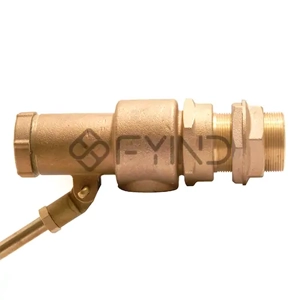
Canvas General Trading LLC supplies brass float valves for tank water-level control, including Euro Brass Float Valves in 1/2" and 3/4" sizes and a 1" Double Lin Brass Float Valve. The listed products are suited to standard plumbing and water-tank applications where a mechanical float valve is required.
Float Valve Products:
Specifications:
Supply & Service: Canvas General Trading LLC offers these float valves through its Dubai operation in Al Quoz Industrial Area 3, with product availability shown for the listed sizes. Buyers can confirm current stock and delivery availability before ordering.
Best For: Standard water-tank float valve replacement, plumbing maintenance and routine water-level control where a brass mechanical float valve is required.
Master Mechanical Equipment LLC supplies stainless steel float valves for water level control, including SS316 models listed in 1/2-inch and 3/4-inch BSP sizes.
Float Valve Products:
Float Valve Specifications:
Related Supply & Services: Master Mechanical Equipment also operates across hydraulic, pneumatic, mechanical and industrial products and provides hydraulic services, pneumatic services, safety equipment installation, and fabrication, assembly and installation services. Its website also states that it serves sectors including oil & gas, infrastructure, marine, construction and general industry.
Location: Abu Dhabi, UAE · Phone: +97125553534
For RFQs, confirm: required BSP size, SS316 material requirement, available stock, operating pressure and the exact tank or water-level application before ordering.
Build Line Building Materials supplies a wide range of PRESTEX float valves in Sharjah, covering multiple models for water tank, plumbing and high-pressure water supply applications.
Location: Sharjah, UAE · Phone: +97165356688
PRESTEX Float Valve Models:
Key Specifications:
Applications: PRESTEX float valves supplied by Build Line are suitable for water tanks, overhead tanks, plumbing systems, water supply installations and replacement of existing float valves.
Supply: Buyers can enquire with Build Line for the required PRESTEX model, size and pressure specification based on the tank or plumbing application.
New Qamar Al Huda Trading LLC offers a range of float valves in different sizes and product variants. Its listed range includes float valves in 1/2", 3/4", 1", 1 1/4", 1 1/2" and 2 1/2" sizes, along with Pegler, Double Line, HM, Robor and Venus variants.
Location: Dubai, UAE
Float Valve Range:
Key Specifications:
Product Selection: With 17 listed float valve products, New Qamar Al Huda Trading LLC can be considered by buyers looking for different float valve sizes and variants from a Dubai-based supplier.
These three methods can all be used to control water filling, but they work differently. Choosing between them depends on whether the application needs simple mechanical level control, electrically controlled flow or automated monitoring with sensors.
| System | How It Works | Best Suited For |
|---|---|---|
| Float Valve | A mechanical float responds to water level and opens or closes the valve. | Simple overhead tanks, reservoirs and applications where electrical control is not required. |
| Solenoid Valve | An electrical coil opens or closes the valve when it receives a control signal. | Automated filling, irrigation, process systems and applications integrated with electrical controls. |
| Electronic Level Controller | Sensors detect liquid level and a controller operates a pump, valve or other equipment. | Buildings and industrial systems requiring level monitoring, alarms, pump control or automation. |
A float valve and an electronic level-control system are not automatically interchangeable. The choice should follow the required flow, pressure, control method, power availability and failure-response requirements of the tank.
The purchase price is only one part of the cost of a float valve. For tanks operating continuously, the availability of replacement floats, washers, diaphragms, seats and pilot components can be more important than a small difference in the initial quotation.
| Ask the Supplier | Why It Matters |
|---|---|
| What is the warranty period? | Confirms how long manufacturing defects are covered and what conditions apply. |
| What components are covered? | Check whether the warranty covers the complete valve, float assembly, diaphragm, piston and other internal components. |
| Are spare parts stocked in the UAE? | Local availability can reduce downtime when washers, floats, diaphragms or seats need replacement. |
| What is the expected spare-parts lead time? | An apparently low-cost valve can become expensive if a simple replacement part has to be imported. |
| Are service kits available? | Useful for industrial and hydraulic valves that may require periodic maintenance. |
| What are the warranty exclusions? | Ask whether scale, incorrect installation, excessive pressure, unsuitable water quality or normal wear are excluded. |
For UAE installations: Ask specifically about replacement parts that are likely to wear under local operating conditions, including floats, washers, diaphragms and valve seats. Hard water and scale can affect moving components, so planned inspection and replacement can be more practical than waiting for the valve to fail. The existing guide also recommends checking local availability of replacement floats, washers, seats and pilot kits before purchase.
Ask the supplier to include the warranty period, spare-parts availability and expected lead time directly in the quotation. This gives you a useful record if the valve needs service later.
Pricing depends heavily on size, material, connection type (screwed vs flanged) and whether it's a simple ballcock or a hydraulically-operated industrial valve. The ranges below are indicative - always get a current quote for your specific size and material.
| Float Valve Type | Indicative Price Range (AED) |
|---|---|
| 1/2"-3/4" brass BS1212 ballcock (domestic) | AED 25 - 80 |
| 1"-2" brass or stainless steel float valve (commercial tank) | AED 90 - 350 |
| PVC/plastic float valve (irrigation/light duty) | AED 20 - 60 |
| DN50-DN100 flanged cast/ductile iron float valve (industrial) | AED 800 - 3,500 |
| Hydraulically-operated modulating/altitude control valve (cooling tower, reservoir) | AED 2,500 - 15,000+ depending on size and brand |
These are indicative market ranges, not fixed quotes from the suppliers listed above. Larger industrial valves vary significantly by brand, pressure rating and whether pilot kits and installation accessories are included - always request an itemised quote.
| Term | What It Means |
|---|---|
| Ballcock | Traditional name for a float-operated valve using a float ball on an arm to control water level, most commonly BS1212 Part 1. |
| BS 1212 | British Standard covering float-operated valves - Part 1 (piston type), Part 2 (diaphragm type), Part 3 (equilibrium type for higher pressure). |
| Equilibrium Valve | A pressure-balanced float valve design (BS1212 Part 3) that reduces the force the float needs to exert to shut off flow against high mains pressure. |
| Altitude Control Valve | A hydraulically-operated valve that controls tank filling using a remote sensing line rather than a float physically mounted inside the tank. |
| Modulating Float Valve | An industrial level control valve that throttles flow gradually as the float moves, rather than snapping fully open or shut, reducing surge and water hammer. |
| Bi-Level Float Valve | A valve that opens at a pre-set low water level and closes at a pre-set high level, commonly used on cooling tower make-up water systems. |
| WRAS Approval | UK Water Regulations Advisory Scheme approval, often referenced for valves in contact with potable water. |
| PN Rating | Pressure Nominal rating (e.g. PN10, PN16, PN25) indicating the maximum working pressure a valve is designed for. |
No. Baker and Drill Max (Drillmax) are names associated with drill pipe float valves - oilfield check valves used inside drill strings to prevent fluid backflow during drilling. They are not designed for water tank or cistern level control, which uses a BS1212-type or hydraulic level control valve instead.
For domestic and commercial tanks, brands such as Watts, Pegler Yorkshire and Prestex-type BS1212 valves are widely available and well documented. For larger industrial reservoirs, FGV Controls ductile iron valves and hydraulic level control brands (Bermad, VAG, AVK, Socla) are more appropriate. Match the brand to the application and size, not the other way round.
Size is determined by the inlet pipe connection (commonly 1/2" to 2" for domestic/commercial tanks, larger flanged sizes for industrial reservoirs) and by the required flow rate - match both the connection size and the float arm/rod length to your specific tank depth and mounting position.
A piston-type valve (BS1212 Part 1) uses a sliding brass piston to shut off flow and can be prone to water hammer on higher pressure systems. A diaphragm-type valve (BS1212 Part 2) uses a rubber diaphragm, generally closing more gently and with less noise.
Plastic float valves are generally used for lower-pressure, non-potable applications such as irrigation. For potable water tanks, brass or stainless steel valves with appropriate approval (such as WRAS) are the more conventional and widely specified choice.
This is usually water hammer caused by a piston-type valve snapping shut quickly under high mains pressure. Switching to a diaphragm or equilibrium-type valve designed for higher pressure typically resolves it.
This is most often a sizing issue - the float arm or rod length doesn't match the tank depth or mounting position, so the valve shuts off too late. Confirming float length against the actual tank before installation prevents this.
Stainless steel internals generally hold up better against scale buildup from hard or desalinated water than standard brass, particularly in tanks with infrequent demand swings where the valve isn't regularly exercised.
A standard float valve uses a float physically mounted inside the tank. An altitude control valve is a hydraulically-operated valve that senses tank level through a remote sensing line, often used for elevated, remote or hard-to-access reservoirs.
Yes - periodic exercising, inspection for scale buildup, and replacement of worn washers, diaphragms or seats extends service life significantly, particularly in hard water conditions common across the UAE.
Some can, but trading focus varies - general trading and building materials suppliers are typically stronger on standard domestic/commercial sizes, while automation and mechanical equipment specialists are better positioned for industrial hydraulic level control valves.
Domestic brass ballcocks typically range from roughly AED 25 to AED 350 depending on size and material, while industrial flanged or hydraulically-operated valves can range from several hundred to over AED 15,000 depending on size, brand and pressure rating.
Whether you need a simple ballcock for a rooftop tank in Sharjah or a hydraulically-operated modulating valve for a cooling tower in Abu Dhabi, matching the valve type to the actual application is what prevents a return trip for the wrong part. Use this checklist before you call:

 0
0